Language, please
#3 : evolution of language → sapir-whorf and modelling the world → questions as a universal interface to our models → prompts and comfort zones → llms and thinking → future of language and text
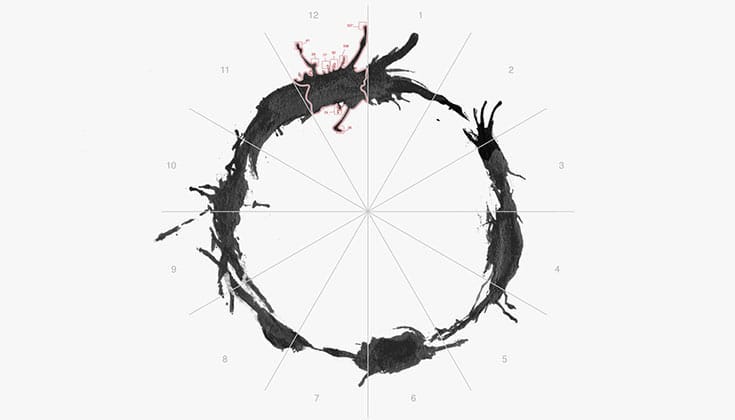
Language as a universal tool.
Language is a universal tool to describe, interact and influence the world. That is one of the reasons culturally the "west" dominates (for now), why I'm writing this article in english (and not chinese for example or latvian), why the most efficient therapy uses questions and why a statistical large language model can display complex reasoning. By no means the ultimate answer to all questions, language is something that is worth investing time and energy mastering.
Starting 50 to 100k years ago it went from a simple symbolic to a complex and rich multimodal system. No one knows when, how, where or why exactly humans developed language. Modern theory converges on certain aspects of language as a coordination and information exchange mechanism. My personal favourite theory is the "Stoned Ape Hypothesis" proposed by Terence McKenna, where he argues that apes had too many psychedelic mushrooms and while tripping developed consciousness, culture and language.
Language, as a system, reflects the world we inhabit. It went from symbolism to oral culture to written to printed and now lately to digital. It’s also shaping our perception of the world. The Sapir-Whorf hypothesis of linguistic relativity states that language shapes reality. Although popularised more by movies like Arrival, than by rigorous scientific proofs, there’s some anecdotal evidence from life and a tiny bit of empirical studies confirming it. It is in any case useful as a framework, as it for sure gives a perspective grounded in culture and a unique point of view how to interpret reality.
This shows how powerful and adaptable as a tool it is. As any tool it also has its dual usage. It can be used as a creative or destructive force, bridge or divide. In any case, being able to speak french will greatly improve your experience in Paris. Not knowing what e/acc is, could limit your experience in San Francisco. And lately, not knowing how to write prompts and interact with AI could limit your potential. At least at your job.
Questions as interfaces.
One of my favourite scenes in The Matrix is when Neo asks "What is the Matrix?". This single question sets in motion an entire narrative, sparking sequels, propelling several actors into eternal fandom and igniting cultural introspection. It's the question that drives us. To ask a question is to initiate a journey, to change the status quo and sometimes to step out of your comfort zone.
There are too many examples when language, communication and questions specifically play a key role in human affairs. For example, questions are core to the socratic method. Which in itself seems to be an effective tool to make sense of the world. And recently we got an opportunity to ask questions from machines. Specifically you can now ask questions from the whole recorded human experience and knowledge. We also invented a fancy word for asking those questions — prompt engineering. Usually there’s not a lot of engineering happening but still we get some amazing results, and I think it unlocks some use cases that were beyond our reach:
Rubberducking — this is a funny one, but I like it. Some programmers have a literal yellow plastic duck sitting on their table. When trying to solve a difficult bug, they would articulate the problem “to the duck”. This is called rubberducking. And talking to an llm can be rubberducking for any tricky thing that you face.
Planning — an obvious one, but still useful, from trip planning to life planning.
Research and Learning — this one is an underrated, personally I’m curious to see how the next generation will use this for learning. If you don’t understand anything you can try it yourself, in theory it should be infinitely patient and be able to explain the same concept in different ways.
Optimisation — begin very general, it’s about solving problems under specific constraints. Anything can be put into this category, including all of the above and most of the stuff not included that would go below.
+ many others.
And just like that we got the socratic method working on a collective human intelligence. There’s a trick though, getting a great answer is very much about asking the right question and about listening.
A path to better thinking.
The interesting thing about getting good answers (from a machine or a human for that matter) is the effort that it takes to formulate a good question. Sometimes the road to a good question is quite a long one, and oftentimes having a structure and writing it out as you go helps. The same applies not just to question, but any idea you have in your head. The platonic version of the idea will disappoint you when written down. And this will be a great thing, because it’s an opportunity for you to develop your idea and be ready to communicate it further.
I’m definitely in the writing as thinking camp. But you should decide for yourself. I merely adapted this stolen idea from people much smarter than myself. There are many examples. Paul Graham does a great job of explaining it here (I hope one day I can write as clearly as he does). Richard Feynman said it nicely too:
"Notes aren’t a record of my thinking process. They are my thinking process."
Feynman: I actually did the work on the paper.
Weiner: That s right. It wasn’t a record of what you had done but it is the work.
Feynman: It’s the doing it — it’s the scrap paper.
Weiner: Well, the work was done in your head but the record of it is still here.
Feynman: No, it’s not a record, not really, it’s working. You have to work on paper and this is the paper. OK?
from Feynman/Weiner interview
Whenever I try to write down my idea or thinking process it becomes quite obvious that a) it doesn't make too much sense b) I need to work more on it c) it sounds like bullshit. So I will then iterate on the idea until it has at least some sound logic. And then also make sure that it has the necessary aesthetics that I value. If you want to think better, start writing down your thought process and ideas. In this context, text plays a critical role — it’s the extended medium for thinking. And it’s worth looking at how thinking is going to change.
The future of text.
This ability for clear thinking and communication might not be as universal as we currently imagine. With further technological development we are not that far away from a world were voice (and even subvocalisation) is enough to prompt a system. That means that the interface we relied upon for literally hundreds of years will change from primarily written to spoken. If that happens, then there’s a high risk of several second order effect consequences on language:
A return to pictogram communication.
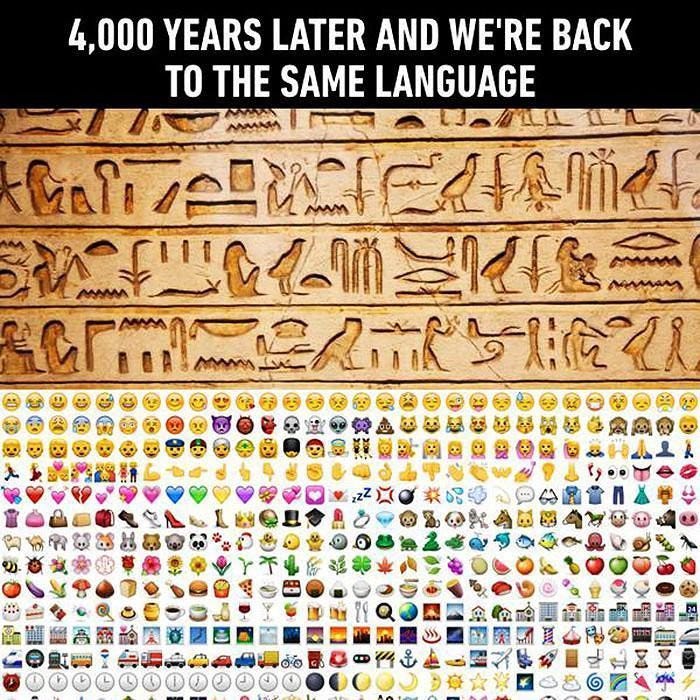
I think there’s a non zero chance that a majority of human civilisation goes back to communicating in emojis. Why would you spend time expressing your thoughts and questions in letters if an AI can summarise what you say in a nice picture, and then explain it to someone else?
Forgetting how to read.
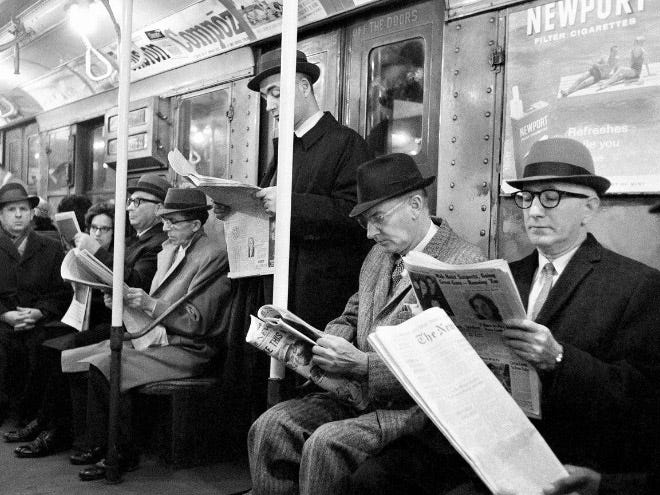
As a consequence of not having a need to write, we will produce less written words and if there’s nothing new to read, why would you want to retain that skill? The consumption of media (for entertainment purposes at least) seems to be shifting already now to video and maybe audio.
Bandwidth constraints.
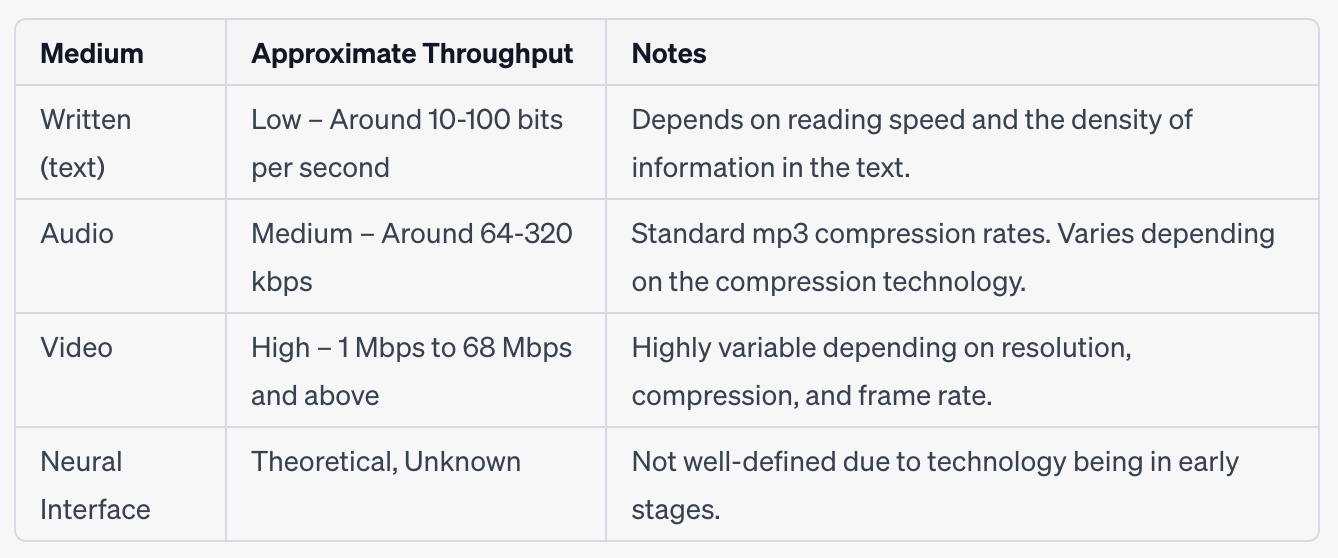
One of the problems with written (read) and even spoken language is it’s somewhat low bandwidth. Assuming language is optimal for information transmission, the next possible innovation in communication might be some sort of brain interface. So ultimately the far future of text is no text.
Closing thoughts
All of the above sounds like a horrible thing, but let’s not be overly dramatic. I confess, I love books, something about the sensation of holding a physical copy of a book that I like is irresistible to me. But at the same time I’m fascinated by more complex interfaces and ability to interact with text, here are a couple of examples while we wait for the future to come:
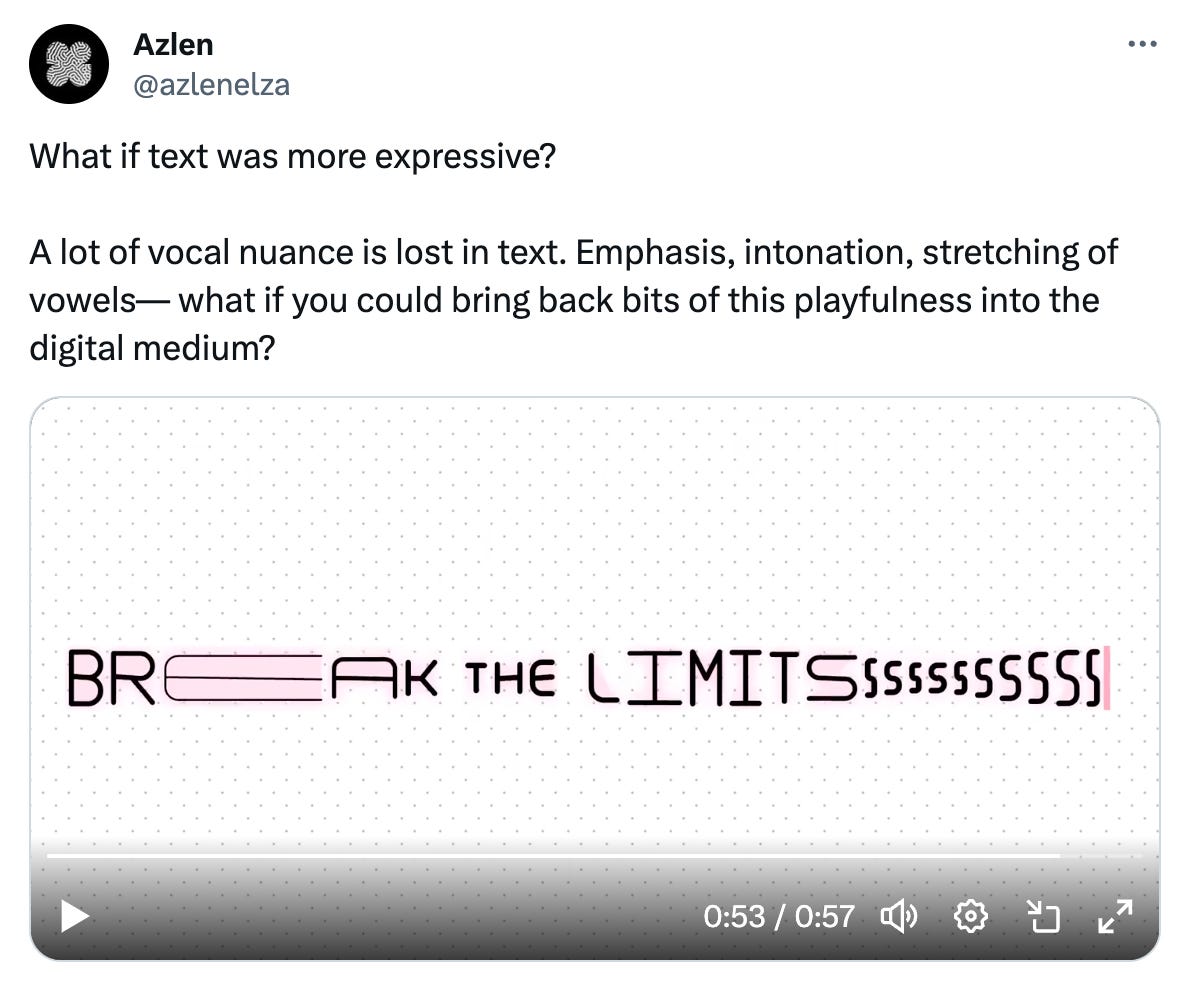
https://twitter.com/azlenelza/status/1486680833431797765
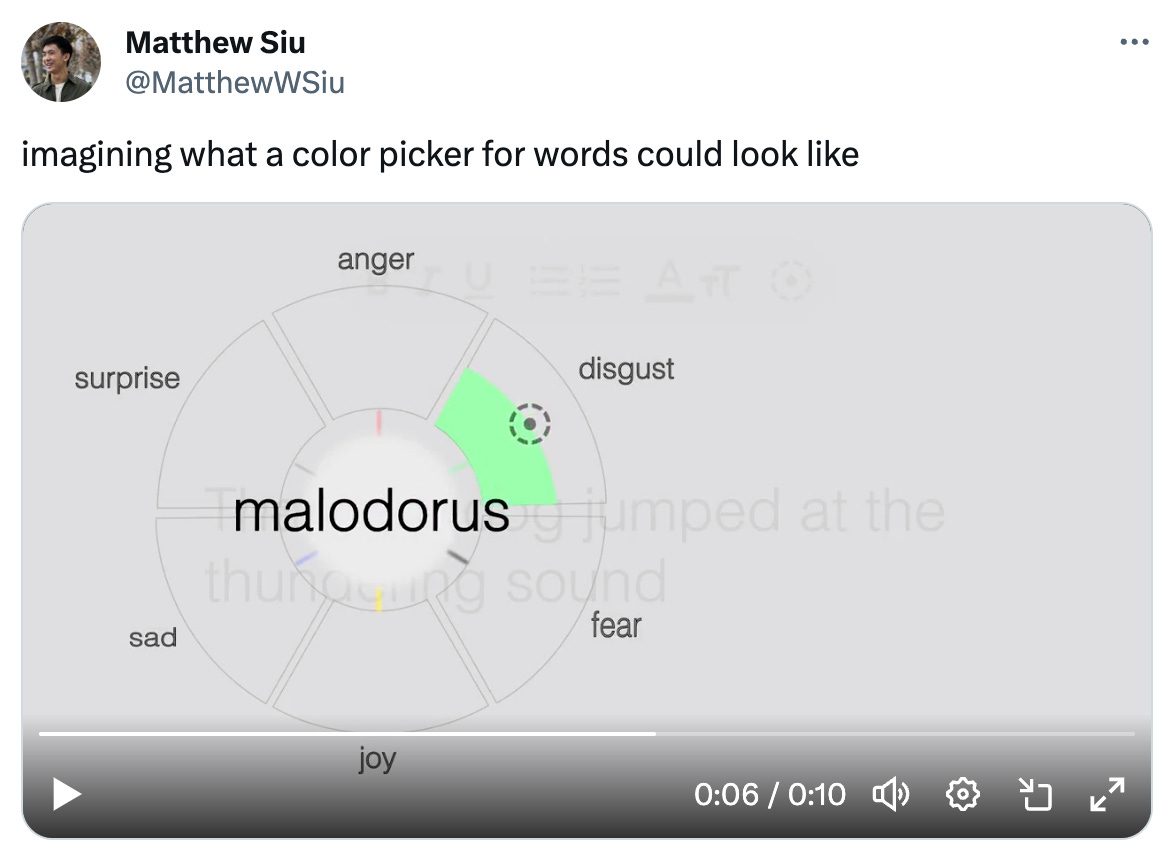
https://twitter.com/MatthewWSiu/status/1560725842019368962
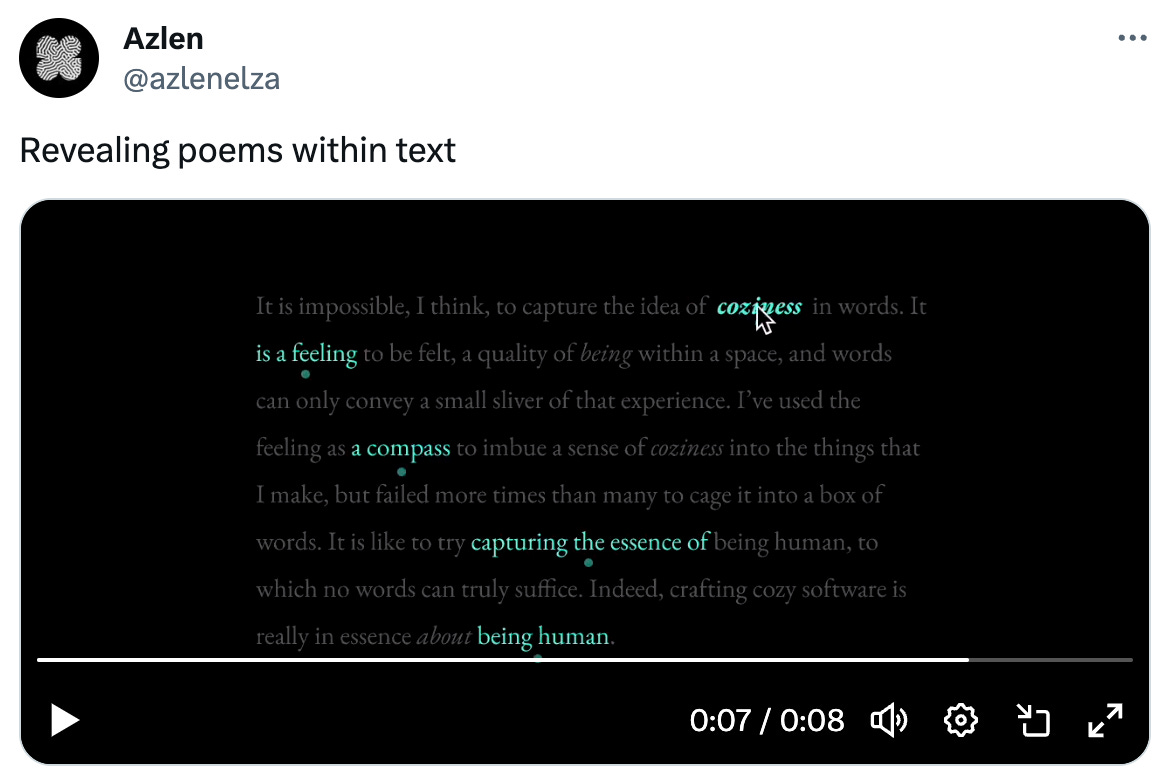
https://twitter.com/azlenelza/status/1592658262956335104
At the end language is primarily about communication and less about text. Now, more than ever, your investment in mastering language will return 10x fold. And mastering language is less about talking and more about thinking, understanding what is important to you and knowing how to ask the right question. It’s a process that no machine or another human can do for you, but fortunately starting is easy.
Here are a couple of questions to start with:
What do I value most in life? What are my principles?
What are my short-term and long-term goals? What about my goals for life?
What is my relationship to people close to me?
What brings me joy and fulfillment?
My observation and struggle is that when I put down an idea or write some lets say presentation script - the words that are getting into the paper are not the ones that will be said. Rehearsing shows that transition words are different when said and thus the verbal structure of narrative differs from the written one. So the writing in my case is good to structure the idea, but sharing idea goes through multiple of iterations sharing it verbally(practicing) and rewriting. Maybe fact of learning cycle where you should 1.read smth, then 2. practice it and finally 3. teach what you’ve learned ~> closes the loop and polishes the language. So writing smth is a starting point and then preaching the written is a real act of mastering the language, in my case :)